QR decomposition
2019-02-23
A = QR left multiplying A by Trans(Q) and also QR by Trans(Q) = Trans(Q)A = RContinue Reading
A = QR left multiplying A by Trans(Q) and also QR by Trans(Q) = Trans(Q)A = RContinue Reading
The Gram–Schmidt process is a method for orthonormalising a set of vectors in an inner product space( to a new set that spans the same k-dimensional subspace as it’s original set of vectors). When the matrix is full column rank it yields the QR decomposition which is composed of aContinue Reading
An Orthogonal matrix is indicated with the letter Q, and each of its column’s has a magnitude(norm) of 1, and each pair of its column’s are pairwise orthogonal(have a 0 dot product). <Q1,Q2>=Trans(Q).Q = I –> Which means that if column Q1 is the same as column Q2 the dotContinue Reading
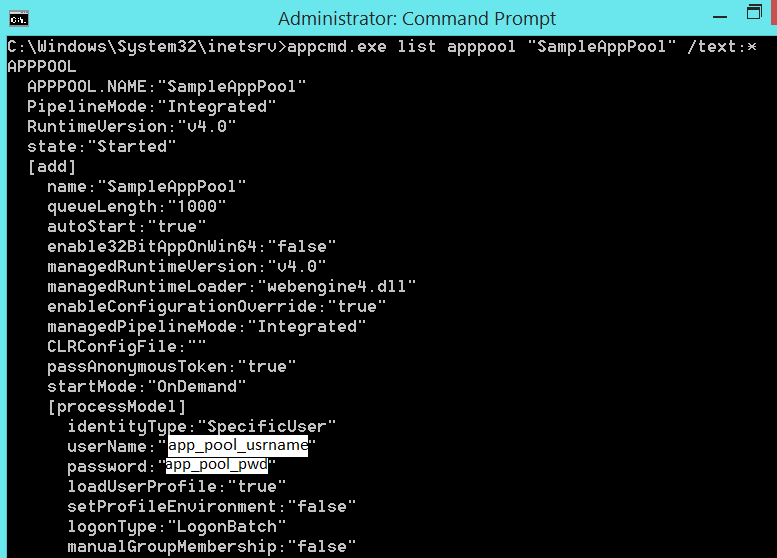
Open CLI with administrator privileges using ctrl+shift, navigate to C:\Windows\System32\inetsrv directory. Type appcmd.exe list apppool /text:* Now search for the password of the administrator you want to find.. and thank microsoft for this easy hack/feature… Continue Reading
w is a vector and v is its reference vector: Decomposing w into two vectors w||v and w⊥v: w = w⊥v + w||v w is perpendicular to v = w⊥v w is parallel to v =w||v w⊥v = w-w||v so to find the parallel vector length, w||v we can use the projection formula:Continue Reading
This algorithm produces an unbiased permutation: every permutation is equally likely. Shuffling an array of n elements in C++: void fisherYatesShuffling(int *arr, int n_elements) { int shuffled_array[n_elements]; int ind_taken[n_elements]; for (int i = 0; i < n_elements; i++) ind_taken[i] = 0; int index; for (int i = 0; i < n;Continue Reading
transpose(A)(b-Ax) = 0 (The zero vector because b-Ax is a vector) The above equals: transpose(A)(b) – transpose(A)Ax =0 transpose(A)(b) = transpose(A)Ax If the matrix is full column rank or of course full rank we can multiply the left inverse of transpose(A)A and get the identity matrix. (transpose(A)A)¯¹*transpose(A)Ax = (transpose(A)A)¯¹*transpose(A)(b) Which leaves usContinue Reading

A square matrix that is not invertible is called singular or degenerate. A square matrix is singular if and only if its determinant is 0. The easiest way to compute the inverse of a matrix is using the formula of RREF, where you augment the matrix with it’s identity andContinue Reading
Gaussian Elimination is one of the main algorithms for solving systems of linear equations. Any equation that has an unknown is called a point equation and has only one solution. Any equation that has two unknowns resolves to a line, and is called a linear equation and has an infiniteContinue Reading
Given a line ‘a’ and a point ‘b’ we want to find a scaled version(λ)’a’that is as close to ‘b’ as possible. The right answer is where the line of λa to b is at a right angle to line a. This line is the difference of the line λa and theContinue Reading